This is my blog for posting material of academic interest (to me). Expect to see stuff about Greek and Roman history, archaeology, Classical literature, the Ancient Near East, historical films, teaching, the reception of the Classics in science fiction, the abuse of history, science fiction criticism, Doctor Who, and occasionally other historical stuff, or just things that I'm interested in. Expect spoilers at all times.
Showing posts with label gladiators. Show all posts
Monday, January 27, 2025
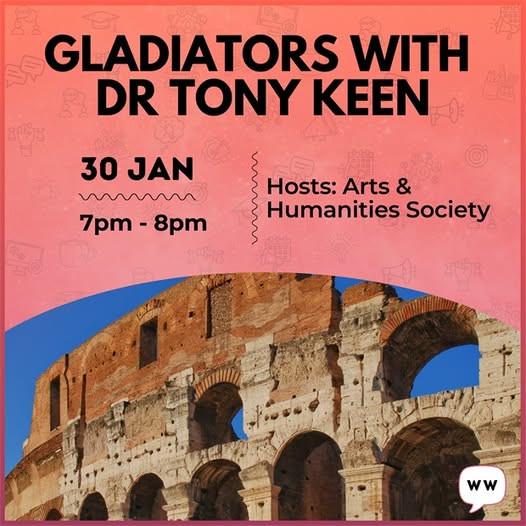
'Gladiators - fact and fiction'
Saturday, January 18, 2025
'Gladiators' lecture
Labels:
Arts & Humanities Society,
gladiators,
Online events,
OUSA
Sunday, December 25, 2016
(The Legend of) Hercules (USA, dir. Renny Harlin, scr. Sean Hood and Daniel Giat, 2014)
Renny Harlin once made a good movie that I enjoyed. It's called The Long Kiss Goodnight, and yes, it's preposterous, and you do wonder why, given that he was married to Geena Davis at the time, he needs to contrive so many opportunities for her to be in her underwear, but it's a movie I always enjoy watching when it comes on telly, as it regularly does. Until The Legend of Hercules, I hadn't seen anything he's made since, and judging by his regular nominations for Golden Raspberries, I haven't missed anything.
The Legend of Hercules, renamed from Hercules to avoid confusion with another (and rather better) 2014 Hercules movie,* doesn't change my impression of Harlin's work in the slightest. It's poorly written, with plot threads discarded as soon as they are of no further interest, poorly directed, and poorly acted, with the improbably named Kellan Lutz, and his improbable pectorals, in the role of Hercules. And there's a Nemean Lion which is so poor it could hardly be worse had they got ventriloquist's dummy Lenny the Lion to do it.
The movie is a hodge-podge of bits taken from other, more accomplished movies. 300, of course, is referenced a lot, and there are a number of the sort of scenes that 300 made a norm, and which are all over Starz' Spartacus series, where exteriors in antiquity are apparently not convincing unless they are filmed in a studio. There's a lot of Gladiator, in scenes anachronistically set in the arena. But there's also nods towards Saving Private Ryan, Troy, Clash of the Titans - there's even a snowy funeral so reminiscent of Anthony Mann's Fall of the Roman Empire that it's hard to believe it's not deliberate, even though the reference would mean little to Harlin's main audience. Towards the end, there's a lengthy section that imitates (not too surprisingly) Hercules: The Legendary Journeys, before Hercules pulls down pillars to which he has been chained, a scene that ultimately goes back to the story of Samson, but which is found in the 1958 Hercules. And then the story suddenly goes all Thor for no readily apparent reason.
The Legend of Hercules is pretty free with its use of mythological characters (not necessarily a point against it); Iphicles and Amphitryon, Hercules' brother and father, are not particularly evil in the existing sources, but the movie needs them to be for the clichéd story it has chosen to tell. Hebe, the goddess who marries Hercules when he is admitted into the ranks of the immortals, here becomes the mortal love interest of the young son of Zeus. Other ancient Greek names are randomly employed - Iolaus, who mythographers will recognise as Hercules' nephew, and fans of The Legendary Journeys know as his best mate, appears as the child of Hercules' ally Sotiris. And there are even less important characters called Agamemnon and Creon.
The movie is also a good illustration of Gideon's Nisbet's argument that Hollywood often has difficultly presenting Greece on screen, because it ends up looking too much like Rome. This emerges not only in the obvious moments such as the arena sequences, where Kenneth Cranham's Lucius is done up in a shabby toga, but also in the battle scenes, where troops march complete with very Roman looking banners. The fact that a battlefield tactic is described as 'testudo' just demonstrates how little anyone involved cares about any distinction between Greece and Rome.
The movie almost does something interesting at the end. Hera has foreshadowed that peace does not lie in Hercules' future, and Hebe stabs herself rather than be used as a hostage by Iphicles, but then ... she doesn't die. Instead, in a twist that bears all the hallmarks of a post-test screening reshoot, Hercules gets the happy-ever-after ending that Hera said he would be denied, and precludes any sequels. They may already have realised that wouldn't be an issue.
* Indeed, when shown on Channel 5, where I saw it, the title had reverted to Hercules.
Labels:
classical receptions,
Classics and Cinema,
film,
gladiators,
Hercules,
movies,
reception
Tuesday, February 20, 2007
More gladiators
Following on from this post, I notice that Mary Beard, who spoke at the conference, has blogged it. Her report of her own paper is interesting. Perhaps she overreacts in underplaying the importance of gladiatorial combats - lack of frequency, after all, can contribute to the importance of an event rather than detract from it - but we modern westerners, fascinated by the (allegedly) alien concept of men killing each other for popular entertainment, do generally overplay it. The gladiatorial games were not top of the bill when it came to Roman mass entertainment - that was chariot racing. I always tell my students that (depending on which figures you use) the Circus Maximus could hold between two and five times as many people as the Colosseum, that it was riots by chariot racing fans that nearly brought down an emperor (Justinian, in AD 532),* and that there's a reason Juvenal (Satire 10.81) says panem et circenses, not panem et munera.
*Not that there weren't riots in amphitheatres - that in Pompeii that got their amphitheatre closed down for a decade comes to mind.
Sunday, February 18, 2007
Gladiators in Chester - apparently really
Experts have unearthed evidence in the remains of Chester Amphitheatre which suggests gladiators appeared there.
Well, yes, of course gladiators appeared in the amphitheatre. That's what happened in amphitheatres. Why should anyone ever think differently?
The next paragraph sheds a little more light - "It was previously thought the arena was only used for ceremonial activities" - but in fact you need to go to other reports to find that what this refers to is the notion that amphitheatres in Britain were only used for military parades and training.
Personally, I've never bought that. The only argument in favour seems to be that amphitheatres in Britain, such as those at Caerleon, Chester, and London, are often associated with forts or fortresses. But for a start, at least one isn't (Silchester). And in any case, an association with a fort doesn't prove that gladiatorial games didn't take place there. If you found a football field in a modern army base, you wouldn't conclude that, because of the military association, no-one actually played football there. I'm more than happy to accept that ceremonial events and military activities did take place in amphitheatres in Britain (after all, modern football stadia are used for activities other than football matches, such as pop concerts), or even that the Roman army paid for those sited next to forts. But I have never seen a convincing argument that these buildings were not used for the same purposes for which amphitheatres around the empire were built.
I wonder, as well, if there isn't a bit of cultural snobbery behind the military theory. It used to be suggested that the Greeks in the East weren't interested in gladiatorial games, because they didn't in general build amphitheatres - the subtext being that the culturally educated Greeks were above such vulgar Roman entertainments. The problem is, they weren't - what happened was that instead of building new specialist amphitheatres, already existing theatres and stadia were converted for gladiators. So I wonder whether in the past, British archaeologists wanted to think that ancient Britons, our noble ancestors, would have no interest in the spectacle of men killing each other. But it's now clear that the Britons loved it as much as anyone else in the empire, and I for one have never believed otherwise.
Subscribe to:
Posts (Atom)


