Showing posts with label Greek history. Show all posts

Saturday, October 10, 2015

The Simonides poem that possibly isn't

For the University of Roehampton this semester I'm co-teaching Introduction to Ancient History. We're just covering the Persian Wars at the moment, and the epigram of Simonides (F 22.a Page) for the Spartans at the battle of Thermopylae has come up. You almost certainly know it. In William Lisle Bowles' translation, which is probably the most familiar form (other translations often model themselves on this), it's
Go tell the Spartans, thou who passest by,
That here, obedient to their laws, we lie.
I describe this as 'the epigram of Simonides', and there are plenty of modern accounts that assert this unproblematically, but it's more accurate to say that it is 'attributed to Simonides'. The problem is that Herodotus, our earliest source for the epigram (7.228), doesn't actually say that it is by Simonides. This is what Herodotus says, in A.R. Godley's Loeb translation (which I use largely for convenience).
All these, and they that died before any had departed at Leonidas’ bidding, were buried where they fell, and there is an inscription over them, which is this:
Four thousand warriors, flower of Pelops’ land,
Did here against three hundred myriads stand.
This is the inscription common to all; the Spartans have one for themselves:
Go tell the Spartans, thou that passest by,
That here obedient to their words we lie.
That is for the Lacedaemonians, and this for the seer:
Here fought and fell Megistias, hero brave,
Slain by the Medes, who crossed Spercheius’ wave;
Well knew the seer his doom, but scorned to fly,
And rather chose with Sparta’s king to die.
The inscriptions and the pillars were set there in their honour by the Amphictyons, except the epitaph of the diviner Megistias; that inscription was made for him for friendship’s sake by Simonides son of Leoprepes.
So, the only text that Herodotus associates with Simonides is the third of these inscriptions. And even there Herodotus only says that Simonides had the text inscribed (using the verb epigraphō). After that, there is then a series of assumptions, set out in J.H. Molyneux' Simonides: A Historical Study (1992), first that if Simonides had an epigram inscribed, he probably wrote it, which seems a fair assumption, and secondly that if Simonides wrote one of the epigrams, he probably wrote the other two, which seems to me to be rather more tenuous.

There are, however, other ancient testimonia. The Greek Anthology (7.248-50) attributes all three epigrams to Simonides. Moreover, Cicero also attributes the text to Simonides (Tusculan Disputations 1.49.101). But I also note that other testimonia for the epigram, Lycurgus, Against Leocrates 109, Strabo, Geography 9.4.16, and Diodorus Siculus, Library of History, 11.33.2, do not mention Simonides' name in connection with it. I wonder if perhaps Cicero and whichever of the many editors of the Greek Anthology first attached Simonides' name also went through the same chain of assumptions mentioned above.

It doesn't mean that Simonides didn't write this epigram; but perhaps we should be more open about the chain of assumptions involved.

Sunday, March 07, 2010

K.J. Dover, RIP

News reaches me of the death of Sir Kenneth Dover, one of the great Hellenists of the latter part of the twentieth century. Coincidentally, I was reading one of his books, Aristophanic Comedy, a couple of days ago, as part of my own work on Aristophanes' Frogs (yes, it's a link to Wikipedia), and wondering if he was still alive. I only met him once, very briefly, and he was quite old then.

Dover is, unfortunately, perhaps best known for some slightly silly remarks he wrote in his autobiography, Marginal Comment, about driving his Oxford colleague Trevor Aston to suicide, comments that got blown further out of proportion by the media. Within the Classics community, it is his writings that will be remembered. Greek Homosexuality was a - erm - seminal work, that set the terms of the debate on the subject, projecting a view in which male-male sexual relations were power relations between older and younger men, and not ones of mutual desire. In recent years people have been deconstructing his model of same-sex relations in the Greek world, notably James Davidson in The Greeks and Greek Love. But Dover cannot be discarded.

I've probably in recent years made most use of his work on Aristophanes - the aforementioned Aristophanic Comedy, commentaries on Frogs and Clouds, and the section on Clouds from a companion to the Penguin translation of Acharnians, Lysistrata and Clouds (the writing on Clouds, okay, I haven't used, but may well in the future). I don't always agree with Dover - like many Aristophanic scholars, I sometimes feel he gives more attention to strict philological interpretations of the text, and not enough to what actually works as comic theatre (this is why one of my academic heroes is Gilbert Murray, who knew not just how to go through a text with a fine-toothed comb, but also how to write for the stage, and allowed the latter practice to inform the former). But, again, his contributions remain of major significance. With the death earlier this year of Douglas MacDowell, another scholar whose work I respected but did not always agree with (though I think I have amended some of my opinions since I wrote that review), it's been a bad few months for Aristophanic scholarship.

Dover also made major contributions to scholarship on Thucydides. He wrote school/undergraduate commentaries on Books VI and VII, and, with Anthony Andrewes (not the Brideshead Revisited actor, who doesn't spell his name like that), completed Gomme's classic historical commentary on Thucydides. It was in these works that I first encountered Dover, as a young schoolboy setting out on what would turn out to be an erratic career in the Classics. (Inevitably, the wags at school referred to him as 'Ben' Dover. I suspect this happened in many schools.)

It was also about this time that I saw Dover on television, as part of a BBC series on the Greeks. Dover was sat talking to the documentary maker, Christopher Burstall, in a small boat off the Piraeus. I never quite understood the reason for this seemingly unnecessarily dangerous activity, but a scholar off this importance is allowed his eccentricities. And, though it's sad that he's died, at 89 he had a good and fulfilled life.

Sunday, January 06, 2008

Changing one's mind

Happy 2008 to anyone still actually reading this. I realize it's been over a month since I last posted here. If I was the sort of person who made New Year's resolutions, then I'd probably promise to make more posts this year. But don't hold your breath.

I got pointed to a webpage where 165 people were asked the question, "What have you changed your mind about? Why?" The contributors are mostly scientists of one description or another, though there's a piece by James O'Donnell that explains why he no longer cheers for the Romans, which I recommend. Reading all the contributions, I found myself thinking about what I've changed my mind about over the years. I certainly believe that the ability to change one's mind in the face of new evidence, or new interpretations of old evidence, is an important characteristic of an honest thinker.

Like O'Donnell, I have changed my mind about the Romans, and especially about the Empire. Once I believed that Augustus was a great man, who rescued Roman civilization from the chaos of the Late Republic, but no longer. Certainly I still believe that he was a highly effective ruler in terms of what he sought to achieve, and for some people life was better after he came to power - provincials undoubtedly appreciated the end of the licensed extortion and asset-stripping that characterized most provincial administration under the Late Republic. But it shouldn't be forgotten that what Augustus introduced was a military dictatorship, an inherently corrupt form of government. The likes of Caligula, Nero and Commodus were inevitable products of the system, not aberrations. And all emperors, even the 'good' ones like Augustus and Trajan, curtailed individual rights and suppressed, often ruthlessly, freedom of thought and expression. Just ask Ovid.

What else? There was certainly a time when, had you told me that there was a difference between sex and gender, I'd have looked at you as if you were mad. But then I didn't know any people who had refused to allow the sex they were born into to determine how they would behave. This year I wrote a short paper for my students explaining exactly why the two aren't identical, and why biological sex doesn't necessarily dictate gender roles (in which I used Ovid's myth of Iphis and Ianthe, just before I found out that Ali Smith had written a Canongate Myth volume around the same legend); that paper is now going to be available to all the students on the course throughout the country.

One thing I've really come to comprehend better this year, and emphasize more to students, is that there's no such thing as 'Roman attitudes'. Where once I would happily have said 'the Romans believed ...', and at the most pointed out that this meant élite male Romans, now I underline that one would have been every bit as likely to find a range of different opinions if one conducted a straw poll in the Roman Forum as if one did the same on Oxford Street. Take, for instance, Roman attitudes to sex. The HBO/BBC Rome series (of which I got the complete boxed set for Christmas, which means I really ought to get around to watching it some time) presented a Roman society in which people were happily having sex all the time. Just before the series aired Tom Holland wrote in The Times criticizing this - the Romans weren't so liberal at all, but rather prudish. I blogged that at the time, saying that I thought Holland overstated and oversimplified the case, and pointing to Ovid as an example of a different attitude to sex (basically, in the Amores and Ars Amatoria, the message is if the opportunity comes along, take it, and here's how one maximizes those opportunities). Holland's not wrong to say that Romans held the opinions he ascribes to them. What is wrong is the implication that this is how all Romans thought. Ovid and Cicero did not think the same about sex, anymore than Juvenal and Hadrian thought the same about Greeks. All one can do is point to general trends of thought, whilst highlighting that these were not universal. Which is actually quite liberating for a teacher - asked to reconcile two apparently contradictory attitudes found in ancient writers, one can simply respond "those two people didn't think the same on the subject."

But sometimes you have to rethink those prevailing opinions. For about a decade, I have believed, and been telling people, that in the ancient world sex was not generally considered a participatory act between equals, but something done by the powerful to the powerless, e.g. men to women, adults to younger men, free men to slaves. With a single article, James Davidson has blown that out of the water. The key quotation is "the ancient Greeks talked of sex not as an act of aggression, but rather as a 'conjoining' or 'commingling'". That sent me to the dictionaries, and indeed, one common, perhaps the most common, Greek word for sexual activity is συμμείγνυμι (summeignumi). The sun- prefix definitely implies doing something in equal co-operation with someone else, as does the fact that the common form is in the middle voice, rather than the active (doing something) or passive (having something done to one). This immediately put Davidson's book, The Greeks And Greek Love on the list of books I must read soon. So far I've got no further than an introductory "Note on transcription and pronunciation" (which features one brilliant comment: "Anxious readers may be comforted by the fact that pronouncing ancient Greek properly is extremely difficult, so nobody ever bothers"), but I am looking forward to it (there's a favourable review by Oliver Taplin in The Guardian).* I may not be wholly prepared to give up the idea that sex was sometimes in the ancient world an expression of power - after all, it remains so often enough today. But I can no longer say that the Greeks had no concept of sex as an act of equals, since such a concept was hardwired into their language.

You may now all speculate why most of the examples I've used relate to sex.

* I have to take issue with Taplin on one point. Criticizing Davidson's reading of a homosexual affair into Homer's portrayal of Achilles and Patroclus, he says, "there is no call to bring sex into it; and to do so Davidson has to turn a blind eye to the night in book nine where they both bed down with women." Taplin may be right about the first point - there's certainly nothing explicit in the Iliad - but, as I wrote in a piece for CA News back in 2005, their sleeping with women is irrelevant unless one assumes that heterosexual activity a priori rules out the same individuals engaging in homosexual relations. Whilst conservative thinkers have believed, and still do believe this, an open-minded glance at the history of human sexuality quickly shows that it's nonsense.

Friday, October 19, 2007

Renault on Alexander

Three weeks ago I posted a shot of my reading material for my week in Barcelona; Mary Renault's four books on Alexander. As it happened, due to a mix up I left The Nature of Alexander behind and took Simon Scarrow's The Eagle's Conquest instead, but that's another story ... In any case, I have now read all four, and should write about them.

I'd actually read very little Renault before this - only her account of the sixth-century BC poet Simonides, The Praise Singer. But she's one of those authors I've always felt I should read more of, especially after last year's rather fine documentary.

There's something about the life of Alexander the Great that, though it makes for glorious biography, resists dramatization. I think it's because it's essentially anti-climactic. His life story builds to a crescendo through the great battles of the Granicus, Issus and Gaugamela, to which the occupation of Babylon should be a coda. But then he lived, and continued to campaign, for another eight years. These years are filled with episodic incidents, that it's hard to sew a dramatic thread through that. Alter the order of events, and a writer will be castigated for inaccuracy. But try as hard as possible to be accurate, and the writer ends up with a sprawling shapeless account, and the harder one adheres to history, the less dramatic the story becomes. Such issues plagued Robert Rossen's 1956 film, and Oliver Stone's 2004 version (which I discussed here, and a little bit here).* I haven't read the trilogy by Valerio Massimo Manfredi (of whom more in my next post), but Paul Cartledge puts the boot into it in his Alexander the Great: The Hunt for a New Past, calling it "unimaginative" (p. 240) and complaining of its "dullness" (p. 312), so perhaps the same problems afflict that work.

How does Renault deal with this problem? Essentially, she sidesteps it, by not really telling Alexander's story. Indeed, to describe the three Alexander novels as a 'trilogy' is misleading, as they do not really link up into a single narrative.

The first time she wrote about Alexander,** in The Mask of Apollo (1966), he is a walk-on, as a fourteen-year old, at the end; this novel is not his story at all. Four years later came her next novel, Fire from Heaven. This is Alexander's story, but it is the story of his youth. It climaxes at a logical point for a climax, at the death of Alexander's father Philip, and his acclamation as king. In her 'Author's note' at the end, she explicitly directs the reader to Plutarch's Life of Alexander or Arrian's Expedition of Alexander for what happened next. The implication is that she had no intention of tackling the later events of Alexander's life herself.

Nevertheless, two years later (and interestingly, at the exact moment that Robin Lane Fox was preparing what remains the best-known academic account of Alexander's life),*** Renault published The Persian Boy, which takes events up to Alexander's death in 323 BC. But it is not Alexander's story. It is that of Bagoas, the eponymous Persian Boy, who narrates the novel. Alexander is a supporting character, albeit the most important one by far. Over a hundred pages pass before Alexander is brought on stage, though his actions influence Bagoas' life long before. In that offstage period are all of the climactic actions of the first part of Alexander's life - the battles, the visit to Egypt, the conquest of Babylon. Alexander is brought on at the beginning of the episodic eight years mentioned above. But it is still not Alexander's story. The dramatic thread is presented by Bagoas' progression, from a novelty at Alexander's court, to his sexual partner, and to eventually becoming Alexander's partner is almost every aspect of his life, accompanying him on his harshest campaigns. Conveniently for Renault, Bagoas' life story is under-reported in the sources, allowing the dramatist considerable scope.

The key crisis of Alexander's later years was the difference between him and his Macedonians over his orientalizing. I have always felt that Alexander saw that he had become the new Great King of Persia, and it was necessary for him to act the role. The Macedonians, on the other hand, saw Persia as conquered territory, and viewed with suspicion Alexander's use of Persians in his administration, army, and his adoption of Persian practices and dress. Renault evidently shares that view. And having a Persian narrator allows her to dramatize that conflict from a Persian perspective, to show how Persians thought it humiliating for Alexander to be addressed in the rough comradely manner his Macedonians used; most historians tend to view this to one degree or another from the Macedonian side, if with more understanding of Alexander's position. (I also think that, wanting to pick up Alexander after Babylon, Renault was more-or-less forced into choosing a Persian central character.)

I also find that it is in The Persian Boy that Renault made the suggestion that has always appealed to me, that when asked to whom he left his empire, Alexander may have said not to kratisto ('to the strongest'), but to kratero ('to Krateros').

Renault clearly found she had more to say about Alexander, but had left herself little room to produce more fiction. So, for the first and only time, she wrote a book of adult non-fiction, The Nature of Alexander,**** which was published in 1975. It is more of a defence of Alexander than anything else - she had already railed against some modern scholars (and the Roman historian Quintus Curtius Rufus) in the 'Author's note' for The Persian Boy. It's a minor work in terms of Alexander scholarship, and blighted by her somewhat blinkered view of Alexander, who for Renault is largely shorn of any possibility of being seriously flawed (though she may well be right about the implausibility of Alexander as alcoholic). But as a means of understanding Renault's attitude towards Alexander, and the way the shadow of William Tarn falls across her, it's a fascinating document.

She put Alexander aside for a while, writing The Praise Singer, before returning to the theme in her final novel, Funeral Games. Again, this is not Alexander's story, though his shadow falls on everything that happens. The novel begins where The Persian Boy ends (indeed slightly before, so that some events are featured in both books), at the deathbed of Alexander. He has already slipped into a coma, and is dead within a few pages. Renault then tells the story of the next fourteen years of struggle for Alexander's legacy. It is a bitty story, due to the nature of the events it describes (and indeed, the struggle for Alexander's empire was not really resolved for another decade after the point at which Renault ends, with the murder of Alexander's son and wife). But there are a number of points of interest. Renault follows the sources in making Krateros a rather shadowy figure, whose actions all seem to take place offstage. And she seems to relish the opportunity of presenting what other people thought of Bagoas, suggesting he is not perhaps as meek and insignificant as he sees himself.

Again, I find myself agreeing with Renault, in this case in her interpretation of the actions of Ptolemy. As the Successors prepared to fight over Alexander's legacy, Ptolemy got himself assigned as satrap to Egypt. Renault gives him what I have always believed to have been his motive; when all the others wanted to take over the whole empire, Ptolemy recognized that none of those with ambitions to rule would accept one of their fellows as their ruler, and without Alexander, to whom they had all deferred, the empire could not hold together. So he identified that part of the empire that could most successfully maintain its independence from the rest (as Egypt often had from Persia in the past), and set about making it his own kingdom.

At the heart of Funeral Games, however, is Alexander's cousin Eurydike. She clearly appeals enormously to Renault. Trained in hunting, accustomed to wearing man's clothes, Eurydike is someone who prefers the company of men, though not for sex, and wishes she were a man. One suspects that Renault herself shared many of those qualities, though she recognizes that Eurydike's failure to conform to what is expected of her is a factor in her downfall.

One last point is to say how much Oliver Stone's film is influenced by Renault, as recognized in an unpublished paper by Shaun Tougher, and emphasized by Stone's participation in the 2006 documentary. He could not have the rights to Renault's novels (HBO and Mel Gibson's Ikon were contemplating a mini-series based on them), but a number of Renault scenes get into Stone's script. Alexander being in his mother's bedroom when his father enters to rape her, is out of Fire from Heaven, and the decision to use Ptolemy's history as a framing device may have been derived from Renault's coda to Funeral Games (though it may also have been a spoiling tactic against the Baz Luhrmann/Dino de Laurentiis Alexander, which was to use Manfredi's trilogy, which purports to be Ptolemy's History). And would Stone have given the limited prominence to Bagoas that he does had the eunuch not featured in Renault's novel?

I'm glad I've read these novels.*****

* There's a typically entertaining discussion of screen Alexanders in Gideon Nisbet, Ancient Greece in Film and Popular Culture, pp. 87-135.

** According to the abstract for a paper given by Shaun Tougher, 'Images of Alexander: the case of Mary Renault', he appears in her 1956 novel The Last of the Wine. He is not included in this list of the novel's dramatis personae, but he may be mentioned in the novel's postscript, set a couple of generations after the main action. I don't have the book to hand to check.

*** For all that other academics can sometimes be sniffy about it.

**** She had written a children's non-fiction work in 1964, The Lion in the Gateway: The Heroic Battles of the Greeks and Persians at Marathon, Salamis, and Thermopylae.

***** There's another review of the trilogy by Jeanne Reames here: http://myweb.unomaha.edu/~mreames/Beyond_Renault/renault.html (you'll have to cut and past the link, because something sucks like a sucky thing, and I can't get the HTML to work). She makes some interesting points, but I think she misreads what Renault is trying to do with The Persian Boy.

Edited 23/10/07: A correspondent tells me that the mention of Alexnader in The last of the Wine is that the manuscript that the novel purports to be is being sent to Alexander; so he doesn't actually appear as a character.

Thursday, September 27, 2007

The Red and the Green


One of my hats is as incoming London Meetings Organizer for the British Science Fiction Association. It's a fun role, that allows me opportunities to have interesting conversations with sf authors.

Last night's guest was Juliet E. McKenna. In the course of being interviewed, the subject of the extreme Marxism that popped up in Greek history in the 1980s (Juliet read Classics at Oxford about the same time I was reading Ancient History and Greek in Edinburgh). ("Is that like Extreme Sports?" asked the interviewer, hero of the BSFA Graham Sleight).

The book on the right is not the only instance of extreme Marxism in ancient Greek history, but it is the fountainhead from which all the other instances flowed. G.E.M. de Ste. Croix. The Class Struggle in the Ancient Greek World was published in 1981 (by which its author was already 70). It is an overtly Marxist theoretical work, that looks at the whole of the history of the Greek world, from as the subtitle says "the Archaic Age to the Arab Conquests" (so much of it covers what is often considered to be Roman history). It's a hefty tome, weighing in at 700+ pages including appendices, notes, bibliography and index. If you were an aspiring Greek historian in the 1980s, as I was, it was a book you simply had to have.

But I suspect it was a book more owned than read. Classicists are en masse a very conservative bunch, and much further behind most academic disciplines in adopting the latest trendy theory - post-modernism, for instance, has never really caught on. I think this theoretical conservatism is both a blessing and a curse, but that's a debate for another time. For now, I'd just say that this attitude means that Class Struggle is probably more respected by Marxist academics than by Greek (and Roman) historians, though its subliminal influence may be greater.

For myself, I can't say I've opened it very often, even when I did a lot of research into Greek history, which I haven't for a decade now. I used to refer to it as "The Big Red Doorstop", which says something about my attitude to it. When I pulled it off the shelf last night, I was surprised to find that the frontispiece is Van Gogh's 'The Potato Eaters', though I'm sure I must have occasionally consulted it in the past , and that this is not the first time I've actually opened the book.

On the left is de Ste. Croix's other famous book, The Origins of the Peloponnesian War, published in 1972. My copy of this is rather more well-thumbed than Class Struggle - the pages are slightly dog-eared, the spine beginning to crack, and there are pencil annotations in the margins (yes I do write in my books - why do you ask?). It's also listed in the bibliography for my own book.* And it's something that used to come up time and again in other works. I rather think that, within the field of Greek history, this will be the more influential of his two major works. (And it's lighter.)

I never met de Ste. Croix, but I did see him across the common room in New College one time when I was visiting. This was in the early 1990s, and I gather that by this time he was quite unwell, and his faculties were not all they once had been. Yet he still continued to write up to his death in 2000.

In other news, Doctor Who is doing a story set in the Roman empire, the first since 'The Romans' in 1964. Be assured that I shall be blogging that when it is broadcast.

* Amazon appear to have misspelt my name. There was a time when this book was credited to 'Antony G. Keen' and 'Anthony G. Keen'. Clearly someone thought, obviously that's the same person (correct), and deleted what they thought was the least likely spelling, without checking the actual cover of the book (incorrect).

Tuesday, April 18, 2006

Mary Renault

I've just watched a very interesting documentary on BBC Four on Mary Renault. It worked hard to put Renault's work in the context of movements in Classical education in the 1950s, and managed to pack much more into an hour than most history programmes do - at one point I looked at the clock and saw it had only been going on for twenty minutes, which I couldn't believe given what they'd managed to say.

The Usual Suspects (Tom Holland, Bettany Hughes, etc.) were among the talking heads, but there were also contributions from professional academics (and friends of mine) Gideon Nisbet and Nick Lowe. I shall clearly have to do something about reading more of Renault than just The Praise Singer. Curiously though, no mention of her one non-fiction book, The Nature of Alexander.

The programme is repeated at 00:50 tonight, and will no doubt appear on BBC2 soon. Watch for it.

Sunday, February 06, 2005

Alexander

A quarter of a century ago, Michael Cimino directed a film called Heaven's Gate. It was roundly condemned as being the worst film ever made. When I finally got to see it, I wondered if that was fair. It wasn't a great film, but it wasn't that bad. And I feel much the same about Oliver Stone's Alexander. The critics have savaged it, throwing around terms like 'camp classic', 'risible' and 'Stone's worst film'. It's a bit of a surprise, therefore, to enter the cinema and discover that it's all rather ordinary, and not really warranting the invective thrown at it. I would never claim that it was a great film, or even particularly good one, and certainly don't intend applying the term 'flawed masterpiece'. But is it really as bad as everyone says? As Philip French notes in The Observer, it's a better film than Robert Rossen's 1956 Alexander the Great. It is on a whole series of levels a more successful film than Antoine Fuqua's ludicrous King Arthur. And I find it difficult to believe that the mooted rival Alexander the Great, to have been directed by Baz Luhrmann and produced by Dino de Laurentiis, would have been better. A combination like that has 'gross excess' written all over it, in terms of camp Pontin's at Camber Sands to Stone's trailer tent with a Calorgas stove.

That Stone's film has flaws is undeniable. It is, for a start, too long, but that is not an uncommon fault amongst films these days. In fact, it doesn't drag too badly - Rossen's 1956 film seems slower, though it is actually an hour shorter, whilst Mel Gibson's The Passion of the Christ, also an hour shorter, is far more tedious. But Stone's film is undeniably badly, and unevenly, edited, in what seems to have been a rushed effort to bring the film down from its original four hour length. Some points have been completely lost in this. The Irish accents sported by almost all the Macedonians (though Jonathan Rhys Meyers' Cassander evidently comes from that little-known part of Ireland called Swansea, whilst Gary Stretch as Cleitus reckons his native Liverpudlian is good enough) has been the source of much amusement from reviewers, and generally assumed to be to try to make them fit with Colin Farrell's native tones. But in fact Stone is trying to explain the relationship between the sophisticated Greeks and the Macedonians they despise as moronic country bumpkins, by characterizing it as similar to that between the English and the Irish. Except that there are almost no Greeks left in the film, so the point is lost.

Other points are beaten to death - subtlety has never really been Stone's strong point. Stone suggests through Rosario Dawson's appearance, accent and choice of jewellery that one of the reasons Alexander marries the Sogdian princess Roxane is because she reminds him of his mother Olympias. And then he makes the point again by having Olympias dictate a letter to her son telling him not to confuse her and Roxane. And then he makes the point again. Later in the film, he establishes through looks that Alexander's companions have conspired to poison him - and then rams the point home in dialogue five minutes further on.

There are occasional flashes of subtlety. In a single look, a brief moment of shock at an unexpected event, Stone exonerates Olympias of complicity in the murder of her husband Philip of Macedon. But these are rare.

It probably does the film no harm that Colin Farrell coincidentally looks a bit like Brad Pitt in the role of Alexander's idol Achilles. Farrell's blond locks have come in for much mockery, and true enough his Rod Stewart barnet is not too convincing. But it looks better than Richard Burton's blonde Beatle wig in 1956, which I feel is the yardstick against which it should be measured. In fact, overall, Farrell does a better job at conveying some humanity in Alexander than Burton's humourless, overly Shakespearian performance. (I haven't seen William Shatner's 1968 TV performance, but I can't imagine it would be better.)

Some casting is wrong. Angelina Jolie, eleventh months older than Colin Farrell, is too young to be Olympias. Perhaps the fact that you expect them to be a romantic couple in a film underscores the Oedpial elements Stone wants to build up, but it means, like Glenn Close' Gertrude to Mel Gibson's Hamlet, you don't believe in the mother-son relationship. Someone like Rene Russo, or at least of her generation, would have been better. And because Jolie is Stone's most bankable star (though how bankable she is after Tomb Raider 2 is open to question) means that she gets more screen time than Olympias' importance perhaps deserves - nor does it help that she spends much of that screen time fondling snakes as if she is a villain in a Bond movie. On the other hand, those who have followed Val Kilmer's career may be surprised to find that he's not completely rubbish.

Historically, the film tries hard to be as accurate as possible. Respectable classicists like Robin Lane Fox and Lloyd Llewellyn-Jones are involved. Lane Fox's 1973 Alexander the Great was my introduction to the subject as well as Stone's, and one of the first works on Classics that I read. Though one of my university lecturers dismissed it as "pretentious", it remains, to my mind, the most readable, if not the most scholarly, book on Alexander.

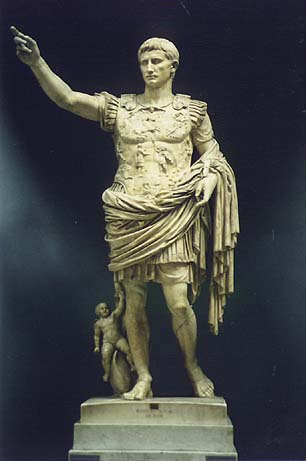
Stone ensures that there great attention to detail in the uniforms and sets, again mocked by some critics as an overly grand gesture, but frankly I am quite glad that Alexander does not, as he does in the 1956 film, spend half the movie wearing a breastplate celebrating a Roman diplomatic coup of three hundred years later (that of the Prima Porta Augustus, celebrating the return of legionary standards by the Parthians). Stone does conflate (the battle of Gaugamela has elements of the earlier battles of Granicus and Issus), oversimplify (Alexander's Successors did not immediately set about dismantling his empire, but for over a decade fought for pre-eminence within an empire that they viewed as a unity), and re-arrange for better dramatic effect (Cleitus was killed before Alexander's marriage to Roxane, not after, and the Macedonian mutiny and refusal to march further east took place after the entry into India and the battle with Indian troops using elephants at the River Hydaspes). However, and this may surprise those who caricature me as a stuffy historian who resents all distortion of the facts, good history does not always make good movies. For a start, Alexander's biography is full of incidents - Lane Fox's book is 500 pages - and not easy to fit into three or even four hours. This sort of historical narrative often suits better a television mini-series - film needs to indulge in the compressions or distortions of a Gladiator or an Elizabeth to get a truly cinematic story. This is a problem that afflicts the 1956 film just as much - that film skips much of Alexander's time in the far east, partly because the story is already dragging, but partly because they probably could not find anywhere in Spain to stand in for the Indus valley. This doesn't mean that Stone's Alexander is incoherent - though I am so familiar with the story that I find it hard to put myself in the place of someone who knows next to nothing of Alexander's life story, which I think covers a lot of the audience for this film.

However, the further away from history Stone gets, the less sure his touch. My friend Tanya Brown commented on how the battle of Gaugamela works better than that later against the Indians. I think this is perhaps because for Gaugamela Stone sticks pretty closely to the historical script. But for the elephant battle, because he wants to incorporate Alexander's wounding, which happened later, and make more of the impact of the elephants, he departs from what actually happened at the River Hydaspes, where, instead of Stone's chaotic battle that the Macedonians barely survive, Alexander scored another decisive victory. The elephants, who were not unknown to Alexander, caused some distress amongst the phalanx, but soon the Macedonians had shot or skewered the mahouts, and the elephants became, as would often be the case, as much of a hazard to their own troops as to the enemy. Stone ends up using his elephants in a fashion that I suspect is only possible if they are computer generated.

Yet there are many good historical moments. Stone's script does try hard to get across points such as the importance of Darius' person in the war, a point the historical Alexander had probably learnt from Xenophon's Anabasis. We also get Alexander's understanding that he has not just conquered the Persian empire, but has become the new Great Persian King, and he must therefore act as the Great King, and no longer privilege his Macedonians - something his Macedonians, who saw themselves as conquerors and superior to the defeated Asians, never understood. And there is even a pun at the end which you will never get if you know no Greek. On his deathbed, Alexander is asked to whom he leaves his empire, he whispers something. "Did he say 'to the best'?" "I thought he said 'to Craterus.'" The pun is in that last bit. What Alexander is recorded as saying is that he left his empire to 'the strongest', kratistos. That is the superlative of the adjective kratos, 'strong'. The comparative is krateros. Which is also the name of one of Alexander's generals.

So why does everyone hate this film? I think there are a lot of reasons. For a start, the story of Alexander is not one that can be used to convey points about American independence and individualism in the face of oppressive foreign imperialism in the same way that the history of the Roman empire has so often been manipulated.

Then, the right wing in America has never liked Stone, because of films like Salvador, and doubtless they feel that circumstances are right to have a go at him. Some critics clearly resented the attempt to produce an epic that had a modicum of intelligence behind it, both the lowbrow critics that don't like (and can't cope with) their entertainment turning into history lessons, and the more highbrow ones who don't like spectacle, and particularly don't like uppity spectacle that tries to have ideas.

And of course, there's the homoeroticism. Stone doesn't try to hide this (though actually hard evidence on the nature of Alexander and Hephaistion's relationship is thin on the ground), but he doesn't make a fuss of it either. One might contrast this with Troy, which went out of its way in the script and in the publicity surrounding the film to deflect accusations of being a 'gay' film, yet is far more suffused with homoerotic imagery than Alexander. (There's much more to be said about this, but at another time.)

It's a shame that Stone is treated like this. He deserves more respect for the brilliant quintet of the mid to late '80s, Salvador, Platoon, Wall Street, Talk Radio and Born on the Fourth of July. Instead, people remember his more recent films (even I've never been able to sit all the way through JFK), and he gets to watch all the awards go to Scorsese's over-rated The Aviator. Let's hope he gets a better reception for the Director's Cut DVD, when he may correct some of the mistakes made in the editing.

It's worth noting that Heaven's Gate now has a much improved reputation, with at least one critic calling it 'a superb achievement'. I doubt that critical opinion will reverse to that degree over Alexander - it's not that good a movie. But I do think it will be better thought of in future. (It is notable that, outside the US and the UK, it has apparently done financially quite well.) And let's hope it's not the end of Stone's career. His films at least show a degree of imagination, and there's not enough of that in Hollywood - when I saw Alexander the coming attractions were two remakes and a sequel to a remake.